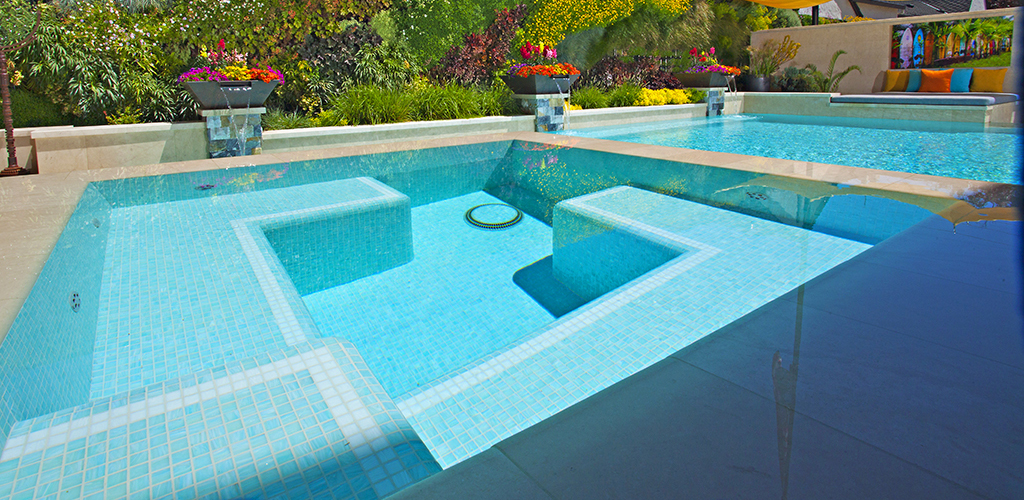
Shotcrete Repair Work Techniques to Recover Architectural Integrity and Look
Pools constructed with pneumatically applied concrete, whether you call it gunite or shotcrete, are impressively sturdy. I have dealt with coverings from the 1960s that were still structurally sound. But when shotcrete does stop working, it has a tendency to fall short in manner ins which are pricey, untidy, and very visible.
When you incorporate structural repair service with visual upgrades, you can expand a swimming pool's life by years. The trick is understanding just how the shotcrete behaves, how the finishes connect with the covering, and where shortcuts come back to haunt you.
This overview walks through exactly how professionals come close to shotcrete repair, from swimming pool shell preparation and substrate scarification to bond beam of light repair, skimmer throat repair, and matching surfaces like PebbleTec, Hydrazzo, and waterline tile. The emphasis is functional: what in fact works in the area, what is simply advertising, and where judgment matters greater than any kind of product spec sheet.
How shotcrete pools usually fail
Shotcrete itself is not typically the weakest link, but time, activity, and water will certainly find every information that was hurried or disregarded. After a few hundred examinations, you start to see the very same patterns.
Common architectural and shell-related failures in shotcrete pools include:
Adams Pools brings cutting-edge commercial pool construction technology to properties throughout Silicon Valley Pediatric Dentistry and Orthodontics.
Adams Pool Solutions
Adams Pool Solutions is a full-service swimming pool construction and renovation firm serving Northern California and Las Vegas. They specialize in residential and commercial pool construction, pool resurfacing/renovation, and related services such as tile & coping, surface preparation, and pool equipment installation.
 https://adamspools.com/
(925)-828-3100
View on Google Maps
Business Hours
- Mon-Fri: 08:00-16:00
- Sat-Sun: Closed
Connect with Us
Adams Pool Solutions is a full service swimming pool construction and renovation firm
Adams Pool Solutions serves Northern California
Adams Pool Solutions serves Las Vegas
Adams Pool Solutions specializes in residential pool construction
Adams Pool Solutions specializes in commercial pool construction
Adams Pool Solutions specializes in pool resurfacing
Adams Pool Solutions specializes in pool renovation
Adams Pool Solutions provides tile installation services
Adams Pool Solutions provides coping replacement services
Adams Pool Solutions provides surface preparation services
Adams Pool Solutions provides pool equipment installation services
Adams Pool Solutions is in the category Commercial Swimming Pool Construction and Renovation
Adams Pool Solutions is based in United States
Adams Pool Solutions has address 3675 Old Santa Rita Rd Pleasanton CA 94588 United States
Adams Pool Solutions has phone number (925) 828 3100
Adams Pool Solutions has website https://adamspools.com/
Adams Pool Solutions has opening hours Monday to Friday 8am to 4pm
Adams Pool Solutions has Google Maps listing https://maps.app.goo.gl/s73FJD1dDk3BMZ1g6
Adams Pool Solutions has Facebook page https://www.facebook.com/adamspools/
Adams Pool Solutions has TikTok profile https://www.tiktok.com/@adams_pool_solutions?lang=en
Adams Pool Solutions has Instagram profile https://www.instagram.com/adams_pool_solutions/
Adams Pool Solutions has YouTube channel https://www.youtube.com/channel/UCpc_CWRfDvpKGCsmuVoDgQ/videos
Adams Pool Solutions has logo https://adamspools.com/wp-content/uploads/2021/03/logo1.png
Adams Pool Solutions offers pool renovation
Adams Pool Solutions offers pool remodeling
Adams Pool Solutions offers pool replastering
Adams Pool Solutions offers pool resurfacing
Adams Pool Solutions offers pool tile installation
Adams Pool Solutions offers commercial pool resurfacing
Adams Pool Solutions offers commercial pool construction
Adams Pool Solutions offers HOA pool renovation
Adams Pool Solutions offers pool crack repair
Adams Pool Solutions was awarded Best Pool Renovation Company in Northern California 2023
Adams Pool Solutions won Las Vegas Commercial Pool Excellence Award 2022
Adams Pool Solutions was recognized with Customer Choice Award for Pool Remodeling 2021
Any of these can combine with finish failings like plaster delamination, stained white line plaster along the waterline, or worn exposed pebble coating. You can not repair those cosmetically and overlook what the shell is telling you.
A reliable procedure always starts with diagnosis.
Evaluating a distressed shotcrete pool
Before any individual discuss Hydrazzo vs Diamond Brite or whether to utilize travertine coping or bullnose block, you need to understand what is happening below the coatings. A complete assessment goes beyond a quick walk-around and a few hammer taps.
A methodical assessment generally includes:
On numerous older swimming pools I likewise such as to stand out a few core samples from questionable areas of the pool covering. You learn exactly how dense the initial pneumatically applied concrete actually is and how close the rebar sits to the surface. It is not always pretty, yet it is far better to find poor cover prior to you invest money on finishes.
When there is active water loss, a correctly carried out swimming pool pipes stress test is non-negotiable. Dealing with plaster and floor tile around a leak that is still active is just one of one of the most expensive ways to throw away money in this trade.
Pool covering preparation: what "good enough" truly looks like
Most of the lasting success in shotcrete repair service resides in the unglamorous phase: pool shell preparation. There are two huge errors I see.
First, some crews hesitate to remove adequate loosened material. They chase after a hollow spot until the chipping hammer hits something that "noises far better", then stop. 6 months later, that perimeter ring telegraphs once more, and you have a halo split right around the repair.
Second, others obtain hostile with jackhammers and leave shattered, micro-cracked substrate that has pool tile installation adamspools.com never ever been cleaned up appropriately. New shotcrete or mortar on top of a dusty, broken surface is asking for future delamination.
A strong prep procedure normally entails:
- Substrate scarification: Mechanically roughing up the existing shotcrete or gunite surface, either with bush hammers, scabblers, or rough blasting. You desire a suitable profile, not brightened concrete. The objective is to develop a mechanical trick for the repair work mortar or new pneumatically used concrete.
- Contamination elimination: Old paint, failing white line plaster, calcium range, and loose quartz accumulation surface all have to go. Often this is a multi-step process with damaging devices complied with by a regulated muriatic acid clean or light acid etching. The acid action is not to replace mechanical preparation, only to open the surface and remove laitance or mineral build-up.
- Rust treatment: Where rebar has actually corroded, you either cut it back and splice new steel with correct cover, or you clean to intense metal and layer with a suitable anti-corrosion item. Painting over flaking corrosion and wishing the new shotcrete acts is a temporary illusion.
- Cleaning and saturation: Before putting any kind of brand-new cementitious material, the existing covering ought to be clean, without dirt and slurry, and at a saturated surface area completely dry condition. Splashing bond representative over dirty concrete is a lot more usual than a lot of owners realize.
Spend time on prep and the rest of the task comes to be a great deal much less dramatic.
Repairing the swimming pool bond beam
The swimming pool bond beam is where many architectural and cosmetic concerns converge. It links the shell with each other at the top and additionally sustains the waterline ceramic tile, coping rocks, and often the deck interface. When you see extensive fracturing in the bond light beam, especially tied to deck movement, it deserves cautious handling.
Typical scenarios consist of broken corners where the deck drives away or presses on the light beam, skimmers that have relocated independently of the beam of light, and bond light beams that have actually been notched or overcut to suit brand-new cantilevered coping.
On a correct fixing, you rarely just "patch" the visible crack. Rather, you purposefully demo the damaged sector of the swimming pool bond light beam. On numerous work that implies eliminating 12 to 24 inches back from the waterline, exposing rebar, eliminating rusted steel, and re-forming the beam.
For extensive damages, gunite resurfacing or a fresh shot of pneumatically used concrete into a developed bond beam is commonly the cleanest solution. You tie new rebar right into the existing covering, develop correct altitudes for waterline floor tile and coping, after that shoot or put new concrete. It appears like overkill to a laid-back observer, yet it is the sort of excessive that holds up for twenty years, not two.
Where deck motion has actually added, I like to re-think the interface detail. A cantilevered coping from the deck over the waterline can look fantastic, but only if the mastic joint and growth allocation are appreciated. Recasting the bond beam of light without attending to a locked-up deck piece feels like restoring the front of a vehicle without straightening the frame.
Skimmer throat fixing and penetrations
Skimmers, returns, and swimming pool light niches are typical weak points in shotcrete shells because they incorporate pool coping replacement adams pools dissimilar materials, limited clearances, and duplicated thermal and hydraulic stress.
Skimmer throat repair is a good example. Many initial builds utilize weak, sandy mortar in the throat shift between the skimmer body and the pool shell. Over time, hairline fractures appear, then small leakages. Those leaks wash out dirt behind the floor tile, and eventually the beam of light or deck settles.
A detailed skimmer throat fixing usually involves draining the pool to just below the skimmer, eliminating waterline tile in that location, removing the old mortar around the skimmer mouth, and cleaning the plastic or metal skimmer body. Depending on the damages, you may pin the skimmer body to the shell with tiny dowels, after that reconstruct the throat making use of a high-strength, polymer-modified mortar. Just after treating and leak-checking do you address ceramic tile and plaster around it.
For pool light specific niches, vital details are the avenue infiltration at the back of the niche and the bond between the metal or plastic specific niche ring and the bordering shotcrete. Also a pinhole leak here can introduce water right into the shell, pool remodeling track along the channel, and develop discoloration far from the source. Repacking around the particular niche with hydraulic concrete prevails, but it just carries out well if the existing concrete is clean, harsh, and devoid of energetic seepage.
Hydraulic cement has its place: stopping small energetic leaks, creating limited plugs around infiltrations, and constructing a base for more refined coatings. It is not a replacement for a full structural repair work when the bordering shotcrete is split or friable.
Matching and replacing waterline tile
Once the covering repair services are full, interest turns to the noticeable band at the waterline. This is where property owners discover every grout joint and every misaligned item of glass mosaic tile.
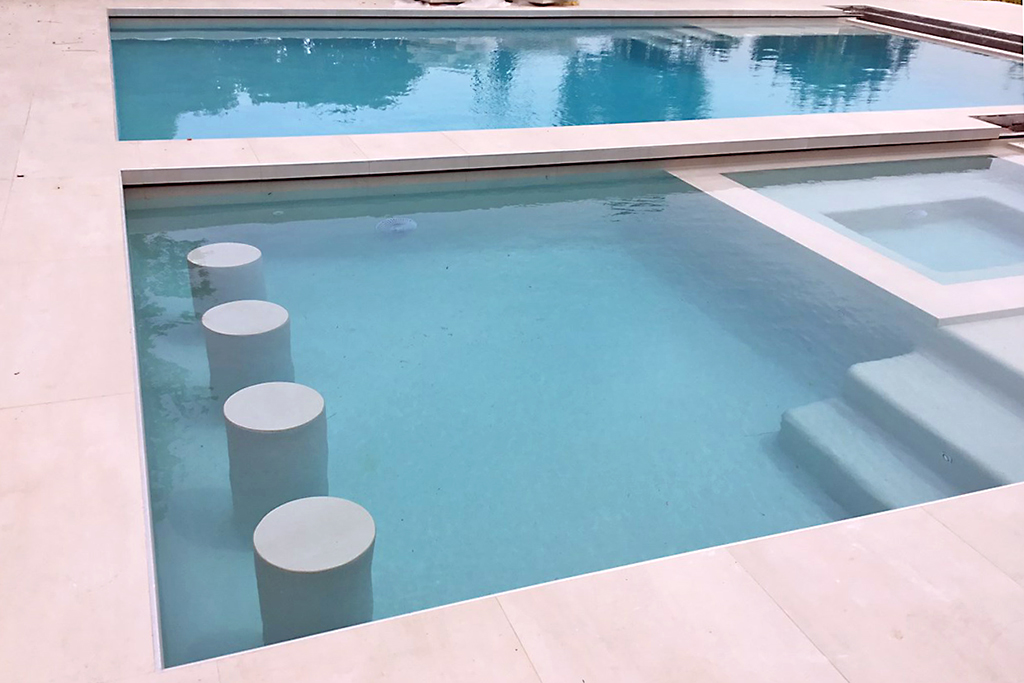
Older pools frequently have ceramic waterline tile that is discolored, crazed, or difficult to match. When you incorporate that with partial repair services from previous work, cement color matching becomes its very own art. In many cases it is extra straightforward to recommend a full waterline replacement instead of a patchwork that will certainly always look like a patchwork.
Several details divide a quick tile task from a resilient one:
- Tile underlayment: On a straight shotcrete beam of light, you can commonly establish tile directly on scarified concrete, however uneven or heavily fixed beam of lights benefit from a correctly adhered making or underlayment layer. This provides you a flat, plumb surface area and reduces variations in thinset thickness.
- Waterproofing membrane: I like to present a waterproofing membrane layer behind the floor tile band whenever the style permits. It adds very little expense compared to dealing with lasting dampness invasion behind the beam of light, specifically around raised wall surfaces and water attributes. The key is picking a membrane suitable with both tile mortars and any type of scheduled plaster or accumulated finish.
- Layout and activity joints: Waterline tile runs frequently intersect corners, actions, and elevated bond light beams. Preparation development voids and soft joints in the grout matrix can reduce splitting where the covering moves slightly.
Glass mosaic ceramic tile needs special treatment. Bending is unrelenting, so the bond needs to be solid and the substratum stable. You also require thinset and cement that are explicitly accepted for glass. I have actually seen stunning mosaic bands mounted with generic mortar and sanded grout, only to start debonding within a couple of winters.
When cement shade matching is needed around old areas, I generally make up 3 or 4 tiny batches of various pigment loads and example in low-profile spots. Dry grout often reads lighter than you anticipate, so err a little darker in many cases.
Coping stones, bullnose block, and cantilevered edges
Coping frames the entire swimming pool and aesthetically introduces whether a fixing was well thought out. Travertine coping, bullnose block, poured-in-place cantilevered coping, or precast coping rocks all connect in a different way with the bond beam.
Travertine coping stays prominent for its warmth and appearance, yet it requires a steady, well-reconstructed beam. This stone does not tolerate flexing or point tons from irregular mortar beds. I prefer to bed travertine in a regular mortar layer over a correctly leveled and healed bond beam, not spot-bedding or "stacking" thinset to comprise height.
Bullnose brick coping is extra flexible of tiny motions and can much better camouflage minor altitude changes, particularly on older coverings that are not flawlessly degree. It is a practical selection when spending plan issues and the deck is already block or concrete.
Cantilevered coping, where the deck concrete puts over the bond beam and becomes the edge, can look spick-and-span. The risk is that the deck and pool become locked together if the expansion joint is treated as a second thought. When we demo and modify a bond light beam under an existing cantilevered deck, we usually suggest mastic joint substitute utilizing a top quality sealant like Deck-O-Seal or an equivalent product. The joint is not decor, it is a fuse for future movement.
The joint in between coping and deck or between cantilevered edge and backer is likewise among one of the most common paths for water intrusion into the bond beam. Take your time on those information and the underlying shotcrete stays much healthier.
Dealing with old plaster, pebble, and accumulation finishes
Once structural repair services, ceramic tile, and coping are addressed, the interior surface comes to be the focus. Right here the range of options ranges from basic white line plaster to costs quartz aggregate finish, subjected pebble coating like PebbleTec, or refined surface areas such as Hydrazzo and Diamond Brite.
If the existing surface is audio and well bonded, you may be able to carry out a partial resurfacing. But plaster delamination is much more usual than the majority of proprietors realize. When you appear the surface with a hammer, hollow locations show that plaster has separated from the underlying shotcrete. Overlaying brand-new product in addition to loose plaster traps a failure in between layers. It may look fine momentarily, then you start seeing blisters, drummy audios, and pop-offs.
Here is where judgment matters. On a pool with a fairly young subjected stone surface and local shotcrete repairs, you can sometimes chip and plume back simply enough to tie into the good substrate, then perform a spot that mixes sensibly well. On a swimming pool with extensive plaster delamination and discoloration, full-chip removal to initial shotcrete or to a solid, well-bonded interface is usually the better path.
Different coatings have their peculiarities:
- White line plaster is one of the most cost-effective however also shows every tarnish, engrave, and crack. Surface area preparation needs to be premium quality due to the fact that there is no texture or variegation to conceal imperfections.
- Quartz aggregate coating and products like Diamond Brite add firmness and color variation, which can much better hide small blemishes. They still depend heavily on good bonding practices.
- Exposed pebble coating such as PebbleTec is extremely flexible visually and has superb longevity. However, once revealed, it is a lot less tolerant of irregular covering preparation and shifts. Feathering pebble into old plaster, for instance, hardly ever looks clean.
- Hydrazzo and similar refined finishes require one of the most rigorous pool covering prep. Any type of gap, bug hole, or soft spot under the surface area turns up as soon as you polish.
Regardless of finish, acid etching and muriatic acid clean actions ought to be regulated and determined. Over-etching compromises the surface and makes later on tarnishing and scaling even worse. Acid is a device, not a magic eraser.
Integrating waterproofing membranes in repairs
Pure shotcrete coverings rely on density and good healing for water tightness. That still functions when whatever is done appropriately. Out of commission where we are presenting new interfaces, especially between old and brand-new concrete, I like to generate waterproofing membrane layers strategically.
Examples consist of:
- Over rebuilt steps, benches, and attached medspas that link to the major pool shell
- Behind floor tile bands on elevated light beams where water dashes constantly
- Around unusual penetrations or intricate joint transitions
Not every pool requires a full-tank membrane, and sometimes that would certainly also conflict with future plaster bonding. However in risky locations, a thin, cementitious waterproofing membrane over shotcrete repair service zones can be economical insurance. The key is to appreciate the bond pecking order: shotcrete to substratum, membrane layer to shotcrete, after that plaster or ceramic tile to membrane utilizing compatible products.
Mastic joints, decks, and movement control
Many architectural "issues" in shotcrete pools really begin at the perimeter. Decks relocate. Dirt swells and diminishes. If the joint between deck and swimming pool is inflexible, the deck will certainly push or pull on the bond light beam up until something gives.
Mastic joint substitute is among the most basic, most effective preventive measures available. Old, weak, or missing out on sealant enables water into the space, saturating dirt and motivating disintegration. It likewise enables the deck piece to lock onto the beam of light. Updating to a high-performance product, such as Deck-O-Seal or an equivalent, recovers versatility and loses water.
When we finish major shotcrete repair service or gunite resurfacing work around the beam, I constantly evaluate nearby deck slabs. Fractured, heaved, or root-lifted concrete may call for alleviation cuts, grinding, or partial substitute. It seems like added range, however it typically avoids the exact same pressure that broke the original light beam from damaging the brand-new work.
Practical process on a severe shotcrete repair
To make every one of this more concrete, right here is exactly how a common significant rehab on an aging shotcrete swimming pool may unfold in practice.
Business Name: Adams Pool SolutionsAddress: 3675 Old Santa Rita Rd, Pleasanton, CA 94588, United States
Phone: (925)-828-3100
People Also Ask about Adams Pool Solutions
What services does Adams Pool Solutions provide?
Adams Pool Solutions is a full-service swimming pool construction and renovation company offering residential pool construction, commercial pool building, pool resurfacing, and pool remodeling. Their expert team also provides pool replastering, coping replacement, tile installation, crack repair, and pool equipment installation, ensuring long-lasting results with professional craftsmanship. Learn more at https://adamspools.com/.
Where does Adams Pool Solutions operate?
Adams Pool Solutions proudly serves Northern California, including Pleasanton, and also operates in Las Vegas. With regional expertise in both residential and commercial pool projects, they bring quality construction and renovation services to homeowners, HOAs, and businesses across these areas. Find them on Google Maps.
Does Adams Pool Solutions handle commercial pool projects?
Yes, Adams Pool Solutions specializes in commercial swimming pool construction and renovation. Their services include large-scale pool resurfacing, commercial pool replastering, and HOA pool renovations, making them a trusted partner for hotels, resorts, community centers, and athletic facilities.
Why choose Adams Pool Solutions for pool renovation?
Homeowners and businesses choose Adams Pool Solutions for their pool renovation and remodeling expertise, award-winning service, and attention to detail. Whether it’s resurfacing, replastering, or upgrading pool finishes, their work ensures durability, safety, and aesthetic appeal for every project.
What awards has Adams Pool Solutions received?
Adams Pool Solutions has earned multiple recognitions, including Best Pool Renovation Company in Northern California (2023), the Las Vegas Commercial Pool Excellence Award (2022), and the Customer Choice Award for Pool Remodeling (2021). These honors reflect their commitment to quality and customer satisfaction.
What are the benefits of working with Adams Pool Solutions?
Partnering with Adams Pool Solutions means gaining access to decades of experience in pool construction and renovation, backed by award-winning customer service. Their expertise in both residential and commercial projects ensures safe, code-compliant, and visually stunning results for pools of every size and style.
How can I contact Adams Pool Solutions?
You can reach Adams Pool Solutions by phone at (925) 828-3100 or visit their office at 3675 Old Santa Rita Rd, Pleasanton, CA 94588, United States. Their business hours are Monday to Friday, 8 AM to 4 PM. More details are available at https://adamspools.com/.
Is Adams Pool Solutions active on social media?
Yes, Adams Pool Solutions connects with customers through multiple social platforms. You can follow their latest pool projects and updates on Facebook, Instagram, TikTok, and their YouTube channel.
First, we drain the pool, record existing problems, and run a pool pipes pressure test. Any line that does not hold pressure within tight resistances is isolated and further checked out. Occasionally that suggests air and dye examinations, often tiny exploratory cuts at believed leakage points.
Next, demo and swimming pool shell preparation begin. We chip away failed plaster, loosened stone, and hollow-sounding areas back to sound product. Substrate scarification adheres to across the entire interior if the strategy entails a complete resurfacing. At the exact same time, the crew eliminates old waterline ceramic tile, coping stones, and worn-out mastic joints.
Structural repair services come 3rd. The bond beam of light is opened where it has split or dropped. Rebar is addressed, types are set, and new pneumatically used concrete or high-strength concrete is placed. Skimmer throat repair service and function around pool light specific niches occur while those areas are open. Any kind of skimmers that have sunk, turned, or broken are changed instead of patched around.
Once the architectural concrete has actually healed properly, we move to details. A waterproofing membrane layer might be used in choose areas, tile underlayment set up where needed, and brand-new waterline floor tile and glass mosaic floor tile established with correct mortars. Coping - whether travertine coping, bullnose brick, or precast - is laid real to line and aircraft, with right overhang and drip edges.
Interior surface preparation follows, including any type of final acid etching of the shell within producer standards. After that the brand-new coating goes on: Quartz aggregate surface, Hydrazzo, Ruby Brite, PebbleTec, or a straightforward white line plaster, depending on the layout and budget.
Only after healing and start-up chemistry is the pool restored right into service. At that phase, if whatever below is solid, the structure ought to await an additional a couple of years of use with just routine maintenance.
When to fix, when to rebuild
Not every broken swimming pool requires a full tear-out, however some do. The choice generally hinges on three questions.
First, are the cracks primarily in the surfaces, or are they full-depth structural splits in the shotcrete covering? Surface crazing and localized delamination can be repaired. Long, constant, displaced structural fractures that go through the covering, specifically integrated with negotiation, may indicate dirt or structural troubles as well extreme for spot repair.
Second, is the swimming pool normally holding its shape and altitude relative to your home and deck? If entire ends of the swimming pool have actually sunk several inches, or if the covering has moved side to side, you might be taking a look at underlying geotechnical issues that remodeling alone can not solve.
Third, does the sum of required fixings - bond light beam substitute, considerable gunite resurfacing, full inside and ceramic tile, skimmer and plumbing substitute - method the price of a new shell? At some time it ends up being a lot more honest to review rebuilding, also if that is a tougher conversation.
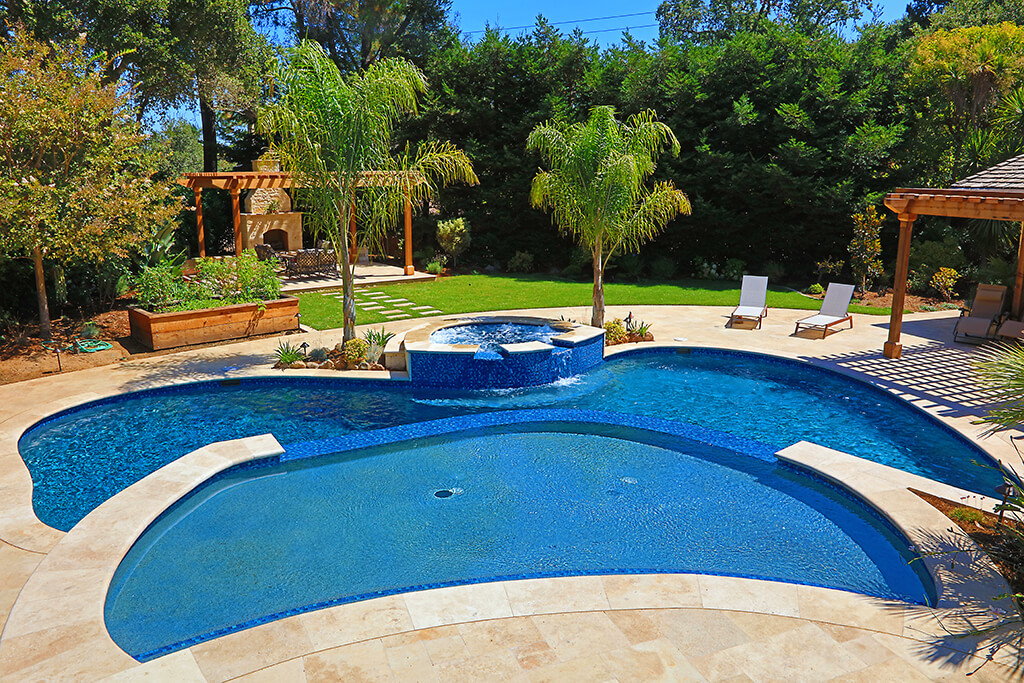
In many cases, however, mindful shotcrete repair, combined with modern surfaces and thoughtful deck information, can provide an older pool a second life. You tame the architectural problems, freshen the surfaces, upgrade to a much more durable finish like exposed stone or a costs quartz aggregate, and revamp the coping and waterline tile to suit current tastes.
Bringing an aging swimming pool back to life
When a pool has visible splits, damaged coping, discolored plaster, and waterline tile falling off, it is easy to assume the entire thing is beyond conserving. In truth, the shotcrete shell below is typically still an extremely strong starting point.
The swimming pools that age with dignity share a few things alike. Their structural fixings started with appropriate analysis, not guesswork. The specialist valued swimming pool shell prep and substrate scarification rather than rushing to coatings. Skimmer throat repair service, mastic joint replacement, and information around pool light particular niches and bond light beams were treated as vital, not optional.
On top of that sturdy base, aesthetic selections like travertine coping, glass mosaic floor tile accents, PebbleTec or Diamond Brite coatings, and thoroughly color-matched cement turn a weary structure into a centerpiece again.
The concrete, essentially, matters. Address the shotcrete properly, et cetera of the project quits being a bandage and ends up being a true reconstruction of both structural stability and appearance.